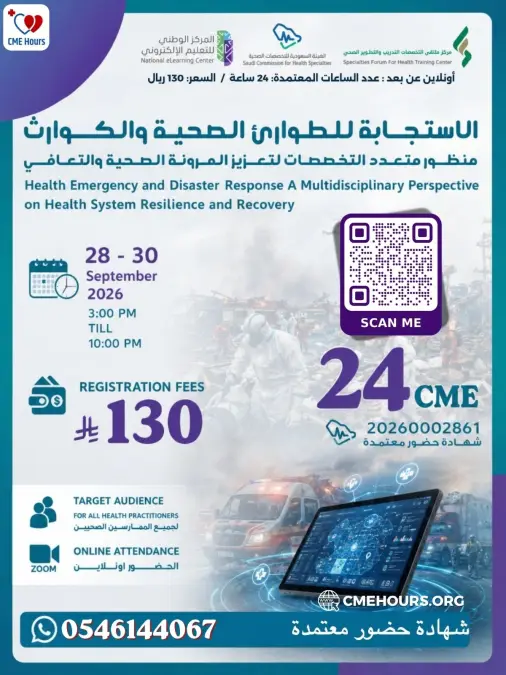
Health Emergency and Disaster Response A Multidisciplinary Perspective on Health System Resilience and Recovery #2

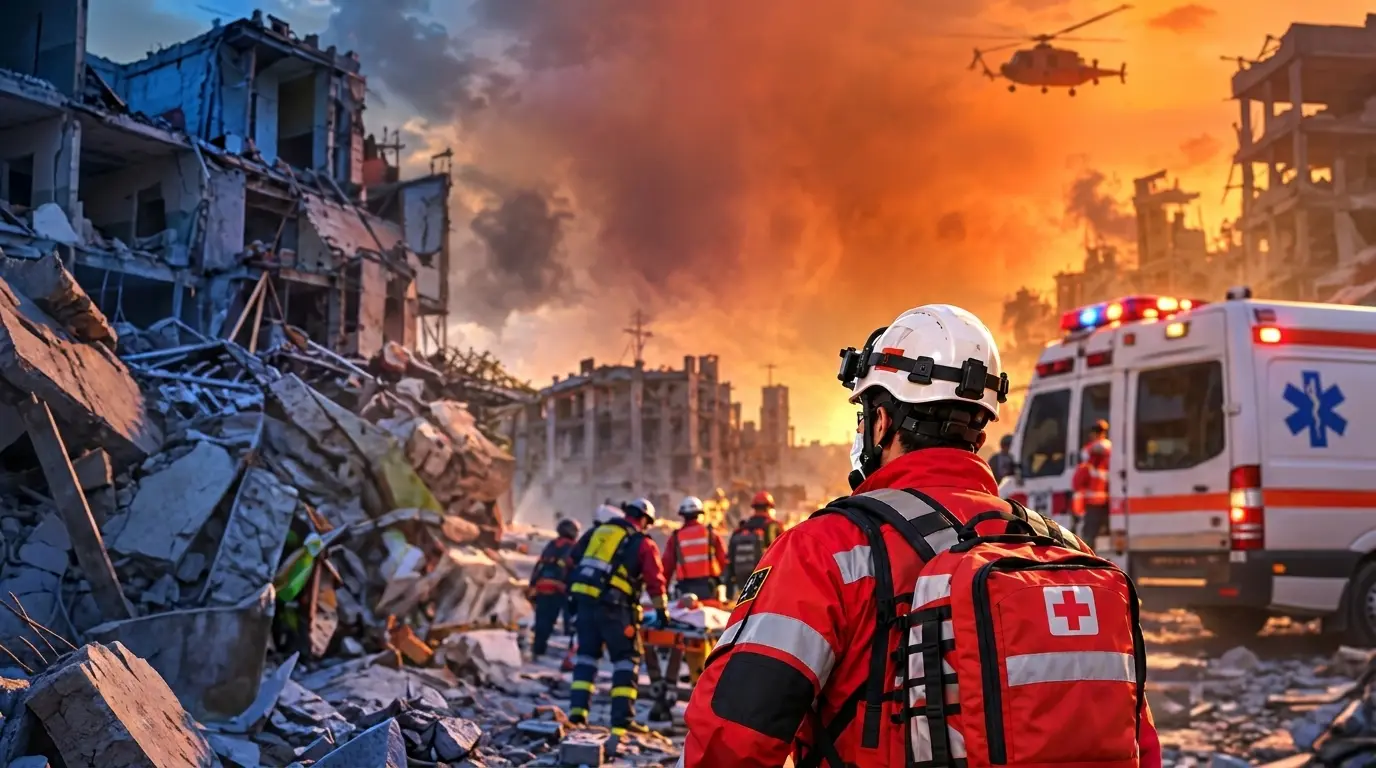
Master Multidisciplinary Emergency Leadership & Hospital Resilience! When disasters strike, clinical continuity, rapid triage, and decisive operational command are paramount to saving lives. Accredited with 24 CME hours, this intensive program delivers an interdisciplinary roadmap tailored for physicians, nurses, pharmacists, and allied healthcare professionals. By enrolling, you will master the Hospital Incident Command System (HICS), advanced mass casualty incident (MCI) triage, strategic healthcare logistics, and clinical protocols for CBRN threats. Gain the cutting-edge capabilities needed to leverage AI in outbreak detection, execute simulation drills, and build agile, disaster-ready healthcare systems.
Health Emergency and Disaster Response: A Multidisciplinary Framework for Systemic Resilience and Rapid Clinical Recovery
Mass casualty incidents, public health emergencies, and catastrophic disruptions pose profound threats to clinical continuity and institutional integrity. This advanced training program provides a holistic, multidisciplinary blueprint designed to elevate healthcare system resilience, harmonize clinical operations across specialties, and execute evidence-based disaster mitigation and recovery protocols.
Prehospital Operations, Incident Command (HICS), and MCI Triage
The curriculum opens with core concepts of emergency medical response and advanced prehospital stabilization. Key operational modules dissect the Hospital Incident Command System (HICS), clarifying unified command structures and multi-agency coordination. Intensive focus is placed on mass casualty incident (MCI) triage methodologies, empowering clinical teams to dynamically prioritize patients, optimize critical care triage pathways, and allocate surgical and airway stabilization resources under severe environmental constraints.
Epidemiological Intelligence, AI Integration, and Biosecurity
Participants explore field epidemiology, outbreak investigations, and early warning public health intelligence. The program evaluates how modern digital innovations, predictive data analytics, and artificial intelligence empower real-time threat detection and situational awareness. These insights are coupled with stringent infection prevention, institutional biosecurity frameworks, and scalable operational models for pandemic and epidemic preparedness.
Clinical Support Continuity and Supply Chain Resilience
Recognizing the critical role of multidisciplinary support departments, the course examines disaster pharmacy operations, clinical pharmacotherapy safety, emergency radiology support, and intensive care unit (ICU) surge capacity management during crises. Furthermore, dedicated sessions detail strategic national medical stockpiles, resilient supply chain logistics, and Lean Healthcare/Kaizen methodologies to streamline workflow bottlenecks and maximize emergency department throughput.
CBRN Emergency Response, Ethics, and Simulation Readiness
The final segment is dedicated to high-consequence threats, specifically Chemical, Biological, Radiological, and Nuclear (CBRN) emergencies. Clinicians will analyze specialized clinical decontamination protocols, antidotes, and multi-agency response mechanisms. The curriculum culminates with critical reviews of crisis communication strategies, legal and ethical frameworks in disaster prioritization, and the practical design of institutional tabletop simulation drills to continuously stress-test and refine hospital disaster readiness plans.
More Upcoming Courses
Other accredited courses you might like