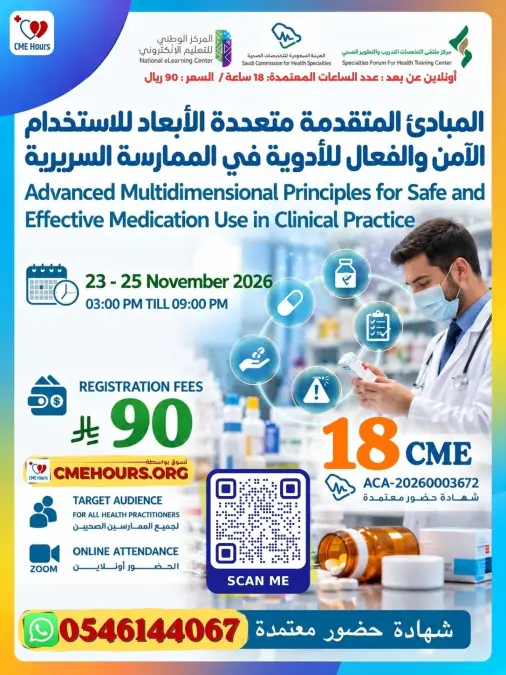
Advanced Multidimensional Principles for Safe and Effective Medication Use in Clinical Practice

Register in 3 easy steps
Fully online via Zoom- 1
-
2
Pay & upload the receipt
The bank details and receipt upload are right inside the registration step.
-
3
Get your hours
Hours are uploaded within 2–4 days after the course ends.
Master Precision Prescribing and Medication Safety! Medication safety is the universal cornerstone of clinical excellence across all healthcare disciplines. Accredited with 18 CME hours, this comprehensive course provides a multidimensional blueprint to navigate complex pharmacotherapy challenges. From mastering renal dose adjustments and deciphering intricate drug interactions to optimizing therapeutic regimens for vulnerable populations like pregnant women, neonates, and the elderly. Enroll now to elevate your evidence-based clinical decision-making, preemptively eliminate medication errors, and champion interprofessional collaboration for superior patient outcomes.
Advanced Principles of Medication Safety: A Multidisciplinary Approach to Clinical Excellence and Risk Management
The safe, rational, and effective use of medications lies at the absolute core of modern clinical practice. Navigating complex pharmacotherapy requires not only an intricate understanding of drug profiles but also a meticulous assessment of patient-specific physiological variables. This intensive scientific program is designed to deliver a comprehensive, integrated clinical framework that empowers healthcare practitioners to tackle complex medication challenges and systematically eliminate medical errors using evidence-based practice.
Pharmacokinetics, Error Prevention, and Regulatory Compliance
The curriculum commences by solidifying foundational clinical pharmacology, emphasizing pharmacokinetics, pharmacodynamics, and the translation of clinical literature into practice. Dedicated modules dive into proactive strategies for preventing medication errors and adverse drug reactions, aligning institutional practices with SFDA risk classification and reporting tools. The program heavily emphasizes interprofessional communication, the integration of "Human Factors" engineering in healthcare, and patient education strategies designed to maximize medication adherence and shared decision-making.
Precision Dosing in Vulnerable and Special Populations
A significant portion of the course is devoted to precision pharmacotherapy in high-risk patient demographics. Participants will master complex dosage calculations and renal dose adjustments—including protocols for patients undergoing various modalities of dialysis—and evaluate the clinical implications of hepatic drug metabolism phases. Furthermore, specialized sessions address pediatric and neonatal pharmacokinetics, geriatric pharmacology (focusing on combating polypharmacy and strategic deprescribing), and the evidence-based management of pharmacotherapy during pregnancy and lactation.
Interprofessional Synergy: Nursing, Dental, Nutrition, and Radiology
Highlighting the collaborative nature of modern healthcare, the program dissects the vital, interconnected roles of the entire medical team. Modules cover the nursing responsibilities in safe medication administration, essential pharmacotherapy in dental practice, and the critical role of dietitians in managing drug-food interactions. Additionally, the course evaluates the use of contrast agents and sedatives by radiology professionals, emergency and critical care medication protocols, and the fundamental principles of clinical antimicrobial stewardship.
Clinical Governance, Ethics, and Quality Improvement (QI)
The final segment addresses the overarching governance of medication safety. Clinicians will review the legal, ethical, and regulatory frameworks governing prescribing practices, including off-label usage and informed consent, alongside the proper management of Over-The-Counter (OTC) medications. By exploring system-level Quality Improvement (QI) tools and the strategic role of health administrators and public health in medication safety, the program culminates in integrated case-study analyses. This ensures that participants can seamlessly translate multifaceted pharmacological knowledge into safe, highly reliable everyday clinical practice.
More Upcoming Courses
Other accredited courses you might like